

Crystals are far more than beautiful structures—they hold the key to unlocking advanced materials and futuristic technologies. When we think of crystals, we often picture sparkling gemstones or snowflakes, but the world of crystals is much broader and even more intriguing.
Recent scientific advances are pushing the boundaries of what crystals can do, particularly in the realm of metal-organic frameworks (MOFs). One fascinating area of research explores how these crystalline materials respond and adapt to their environment, revealing properties that could revolutionize fields from sensing to data storage.
The Science Behind MOF Crystals and Phase Transitions
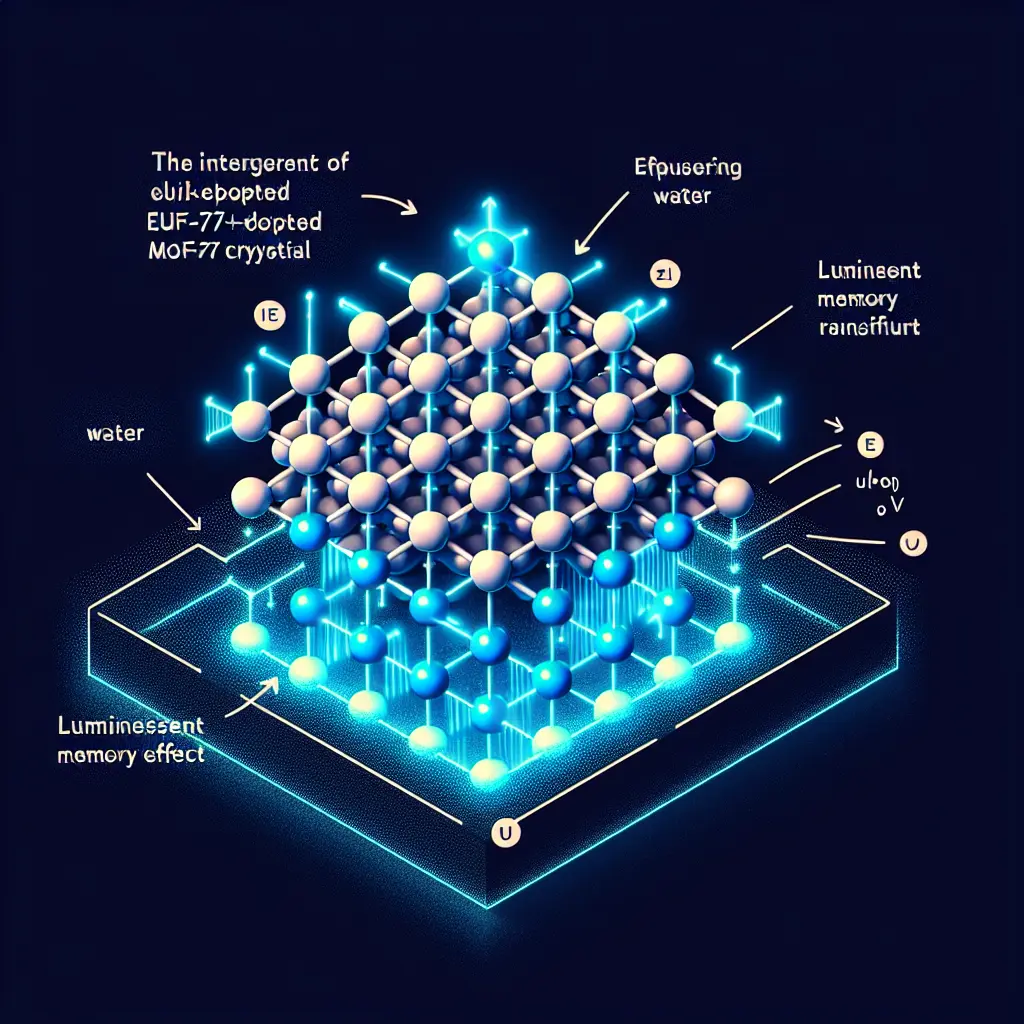
A team of researchers recently investigated the behavior of europium-doped MOF-76(Y) crystals—both at the nano- and micro-scale—when exposed to water over time. These MOF crystals are not just static structures; they’re dynamic systems capable of undergoing phase transitions. A phase transition refers to a fundamental change in the structure of a crystal, much like how water can freeze into ice or evaporate into steam.
In this case, the scientists found that introducing water to the europium-doped MOF-76(Y) crystals triggered a structural transformation. Notably, this transformation was not instantaneous but developed over time, and the response depended on the size of the crystals—nano-sized versus micro-sized. This discovery adds a new dimension to our understanding of how crystals interact with their environment and how their physical properties can be tuned.
Luminescence and Memory Effects in MOF Crystals
Luminescence: Crystals with a Memory
One of the most remarkable aspects of this study was the luminescent response observed in these MOF crystals. Europium ions are known for their ability to emit light when excited—a property that makes them valuable for applications in lighting and display technologies. The researchers noticed that after water-induced phase transitions, the luminescence changed in a way that reflected the crystals’ exposure history.
This “memory effect” means that these MOF crystals could potentially record and report on environmental conditions they’ve experienced. Imagine crystals that change color or brightness based on humidity, providing a visual history of their environment. Such capabilities open doors to innovative uses in sensors, smart packaging, and environmental monitoring.
Key Takeaways from the Research
Dynamic Properties and Real-world Applications
- Crystals are Dynamic: Rather than being fixed, MOF crystals can change their internal structure in response to external stimuli like water.
- Size Matters: Nano- and microcrystalline forms of the same material can react differently, offering opportunities for tailored applications.
- Luminescent Memory: The ability of these crystals to “remember” past environmental changes through altered luminescence could inspire new technologies in data storage and environmental sensing.
This study highlights the vast potential of engineered crystals in our modern world. By understanding and controlling phase transitions and luminescence, scientists can create materials with customizable properties—smart crystals that don’t just look pretty but also serve practical, high-tech functions.
If you’re curious to dive deeper into this fascinating research, check out the full article here: https://pubs.rsc.org/en/content/articlelanding/2025/ce/d5ce00198f
Stay crystal-clear and keep exploring the wonders at the intersection of science and nature!





Leave a Comment