

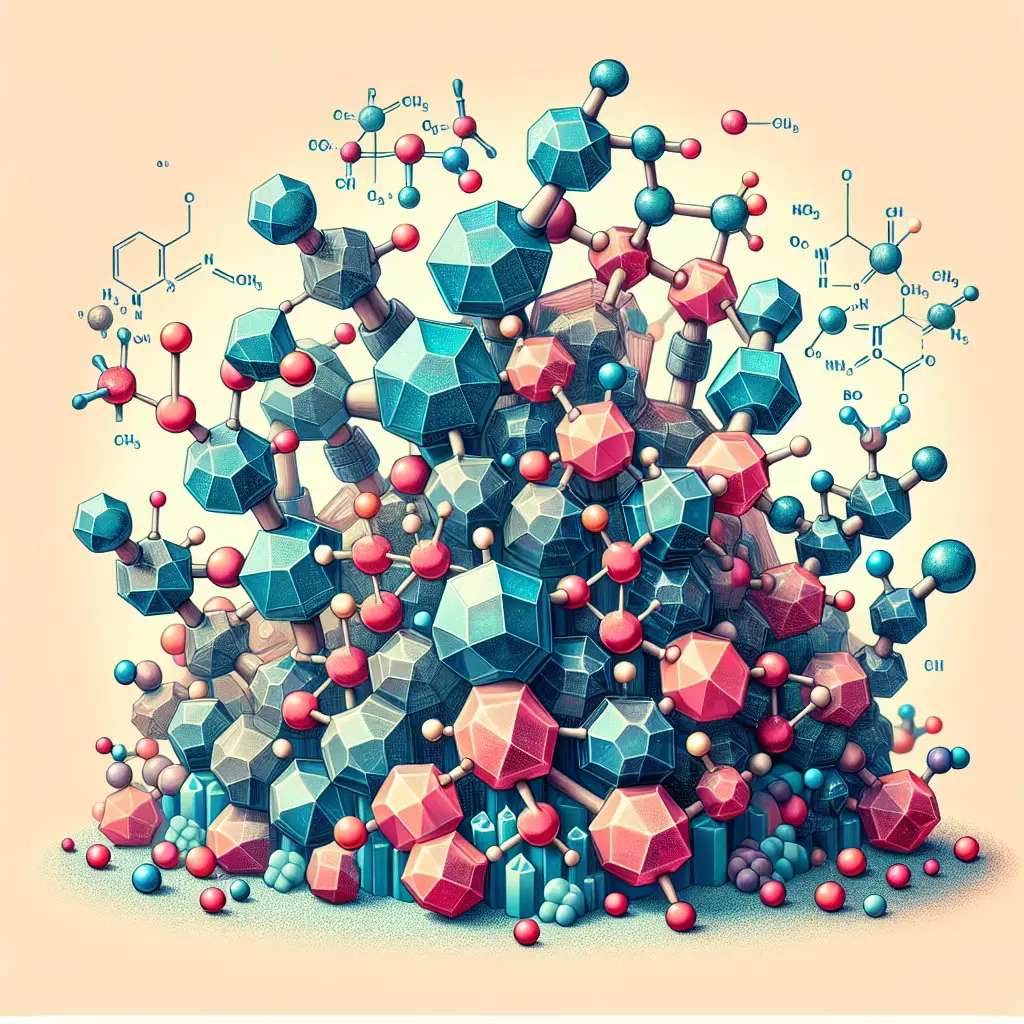
Crystals are not only beautiful to behold, but they also hold the key to groundbreaking innovations in materials science. The study of crystals goes far beyond their visual appeal, unlocking new possibilities for technology and industry.
When we think of crystals, images of sparkling gemstones or intricate snowflakes may come to mind. However, the world of crystals extends far beyond aesthetics—especially in the field of modern chemistry, where scientists are designing new types of crystals with remarkable properties and practical applications.
A recent study introduces a new class of materials known as tetrabutylphosphonium organic ionic plastic crystals that incorporate borate anions. These cutting-edge crystals are a significant development, blending organic and inorganic components to create materials with unique characteristics.
What Are Organic Ionic Plastic Crystals? Organic ionic plastic crystals (OIPCs) are a fascinating group of materials distinguished by their softness and flexibility, ionic conductivity, and thermal stability. Unlike traditional rigid crystals, OIPCs can exhibit a certain plasticity, allowing them to deform without losing their crystalline order. They can facilitate the movement of ions, making them valuable for various electrochemical applications, and many remain stable over a wide range of temperatures, which is crucial for practical uses.
The Role of Borate Anions By incorporating borate anions into the structure, these new crystals gain enhanced stability and customizable properties. Borate anions contribute to the overall durability and performance of the crystal, while the choice of anion can be tailored to achieve specific characteristics, such as higher conductivity or improved compatibility with other materials.
Significance of OIPCs with Borate Anions
The implications of this research are vast. OIPCs with borate anions could be used in next-generation batteries and supercapacitors, helping to create safer and more efficient energy storage devices. Their stability and flexibility may enable new environmentally-friendly processes or recyclable materials. Due to their ability to conduct ions, these crystals could also lead to the development of more efficient sensors and electronic devices.
The researchers successfully synthesized and characterized new tetrabutylphosphonium-based OIPCs incorporating borate anions. These crystals displayed promising thermal and electrochemical properties, paving the way for future explorations into customizing crystal structures for specific high-tech applications.
To dive deeper into the scientific details, you can access the original article here: https://pubs.rsc.org/en/content/articlelanding/2025/ta/d5ta00562k.
Highlights from the Study: The study highlights successful synthesis and characterization of these new crystals, their promising thermal and electrochemical properties, and points to future opportunities in customizing crystal structures for advanced technological applications.
The Expanding Potential of Crystals
Crystals continue to enchant us—not only with their beauty but also through their limitless potential in technology and industry. As researchers unveil new crystal structures with advanced functionalities, we move closer to a future where these materials shape the world around us in extraordinary ways.
The rapid development in crystal engineering opens up new avenues for materials science, particularly as scientists find ways to tailor properties for energy storage, electronics, and sustainable technologies.
With every new breakthrough in crystal research, society gains fresh opportunities to revolutionize how we build devices, store energy, and interact with the material world.
As our understanding deepens and these innovations move from laboratory to real-world application, the impact of advanced crystal materials will continue to grow.
May your curiosity about crystals keep shining bright!





Leave a Comment