

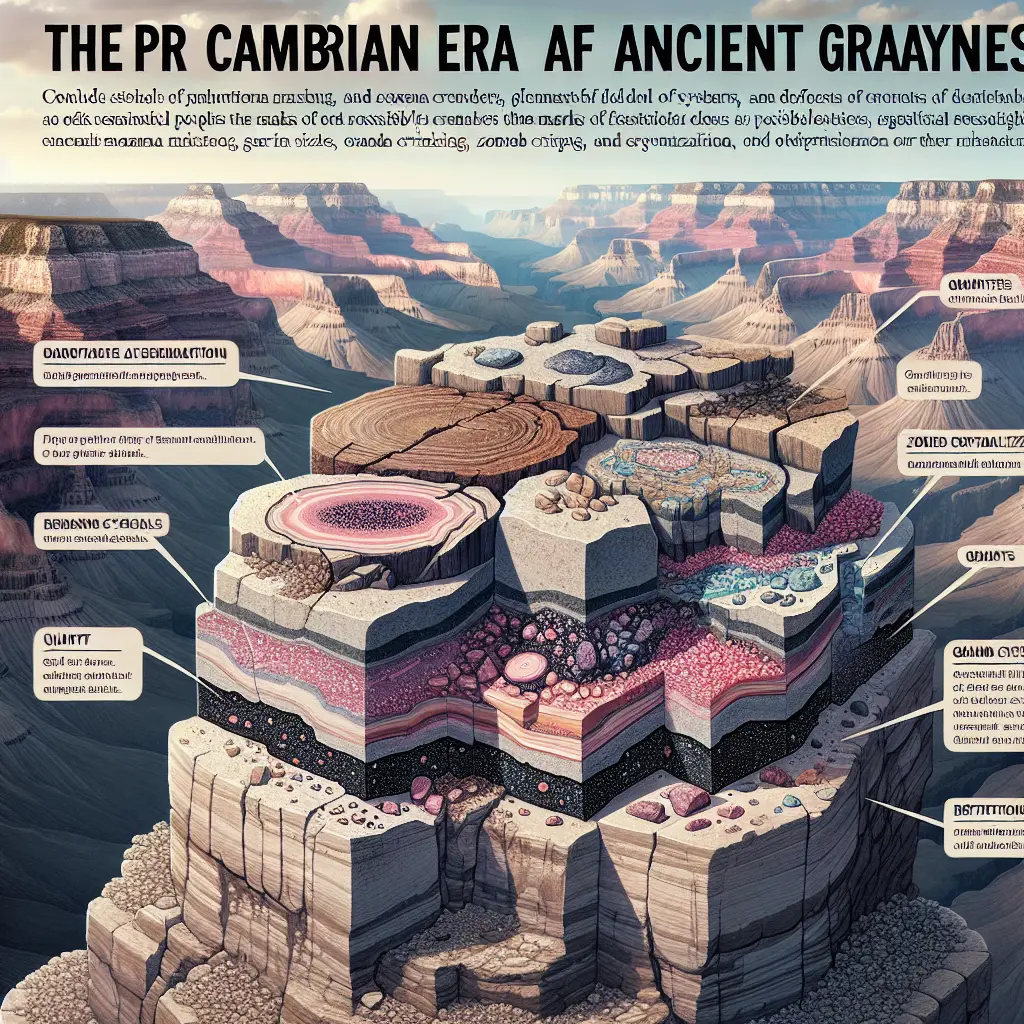
Crystals, often admired for their dazzling beauty, play a far deeper role in Earth's story. These natural formations act as timekeepers, preserving vital clues about the profound geological processes that have shaped our planet over billions of years. In the Grand Canyon's Precambrian crystalline basement rocks, scientists have unearthed mysterious phenomena called radiohalos that help illuminate the canyon's ancient past.
Crystals are not just minerals to be admired—they are nature’s meticulous record keepers. The study of radiohalos within these rocks provides a window into events that unfolded long before human history began. Through systematic research in the Grand Canyon, researchers have begun to decode these crystal records, gaining insights into the origins and transformations of Earth’s crust.
What Are Radiohalos and Why Do They Matter? Deep within granite crystals, tiny spherical zones known as radiohalos form as a result of radioactive decay. These halos are created by alpha particles emitted from radioactive inclusions, like uranium or polonium, trapped within the crystal structure. Over time, these emissions etch concentric rings into the crystals—each one a silent witness to ancient radioactive events that occurred deep in Earth's history.
Radiohalos are significant because they act as natural fossils, marking the passage of time and documenting radioactive decay from Earth's distant past. Studying their size, type, and distribution allows scientists to infer crucial details about how and when host crystals formed. Sometimes, the presence and patterns of radiohalos confirm established models of rock formation; other times, they present puzzles that challenge our understanding of geological timelines.
The Grand Canyon’s Crystal Chronicles The Precambrian basement rocks in the Grand Canyon—granites that date back billions of years—provide a natural laboratory for studying these crystal records. Researchers have thoroughly analyzed radiohalos within these granites, identifying distinct types associated with uranium, thorium, and polonium, each with unique characteristics. The frequency and arrangement of halos offer insights into how these ancient rocks formed and help reconstruct key events during Earth’s early history.
Why Crystal Studies Matter for Geology
Exploring radiohalos within crystals has important implications for geology beyond academic interest. By analyzing radioactive decay within minerals, geologists can estimate the age of rocks with remarkable precision. Crystals preserve evidence of the conditions under which they grew—including temperature, pressure, and chemical environment—allowing scientists to better understand how rocks form. Occasionally, the discovery of certain radiohalos challenges conventional theories about the rate at which rocks cooled or how radioactive materials migrated during crystallization.
These studies not only refine our understanding of Earth's timeline but also help uncover anomalies that prompt new questions about our planet’s development. The Grand Canyon’s granites, with their abundant and varied radiohalos, provide a record of dynamic processes shaping Earth’s early history.
Key Takeaways from the Grand Canyon’s Crystals The ancient granites at the bottom of the Grand Canyon hold an abundance and variety of radiohalos, providing direct evidence of dynamic geological processes in Earth's formative years. These natural records piece together a narrative that spans from our planet’s earliest moments to the present day. Ongoing research continues to unlock secrets held by these crystals—bridging geology and natural history in fascinating ways.
For those eager to explore further into this intersection of crystals and ancient geology, a detailed study is available at Read more about radiohalos in Grand Canyon granites.
Crystals: Storytellers of Earth’s Deep Past
Crystals are far more than beautiful adornments; they are storytellers etched by time. By studying radiohalos within ancient granites, scientists unveil not only the mechanics of rock formation but also the enduring power of crystals as natural archives. Whether admired for their sparkle or their scientific secrets, crystals bridge beauty with discovery and invite us to explore Earth’s remarkable story one layer at a time.
The study of radiohalos continues to open new avenues in geological research, deepening our appreciation for the intricate records hidden within Earth’s oldest rocks. Each discovery adds another chapter to the ongoing story of our planet’s formation and transformation.
As scientists peer further into these natural archives, they reveal connections between past and present that inspire curiosity and wonder about the world beneath our feet.
Crystals remain an invitation to keep exploring—their inner structures revealing layers of history, mystery, and beauty for all who seek to understand Earth’s secrets.
Stay curious and keep exploring the wonders within every crystal.






Leave a Comment